
Singapore’s food culture rewards the curious. Beneath the well-documented favourites, there exists a more obscure category of dishes, ones tied to specific communities, specific occasions and specific family kitchens, that rarely make it onto a restaurant menu at all. Gilmore & Damian D’Silva is one of the few places where several of these preparations can be found, made properly and ordered without needing to know someone’s grandmother first.
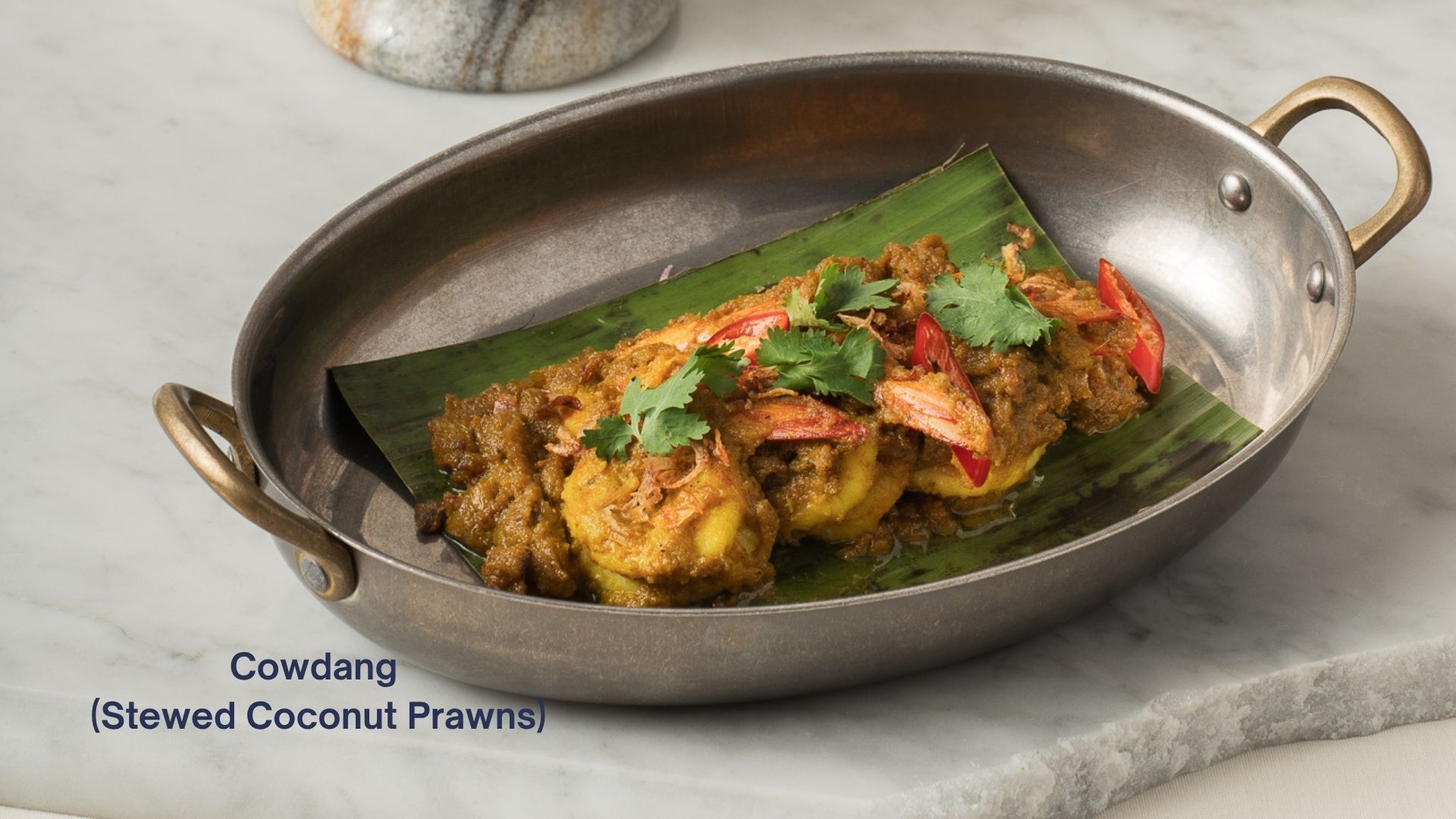
1. Cowdang (Stewed Coconut Prawns)
The name alone warrants a second look. Cowdang is an old Kristang dish, and its name is widely considered a historical misnomer, the exact origin of which remains unclear. What is clear is its lineage: the dish is rooted in the coastal diet of the Kristang community, whose earlier recipes centred on whatever the sea offered. This version focuses on prawns, cooked gently in coconut milk with a restrained hand on the seasoning, which is precisely what makes it distinctive. The intention is to let the prawn’s natural sweetness carry the dish, with the coconut milk providing body rather than richness. It is a study in understatement, and considerably more interesting than it first appears.
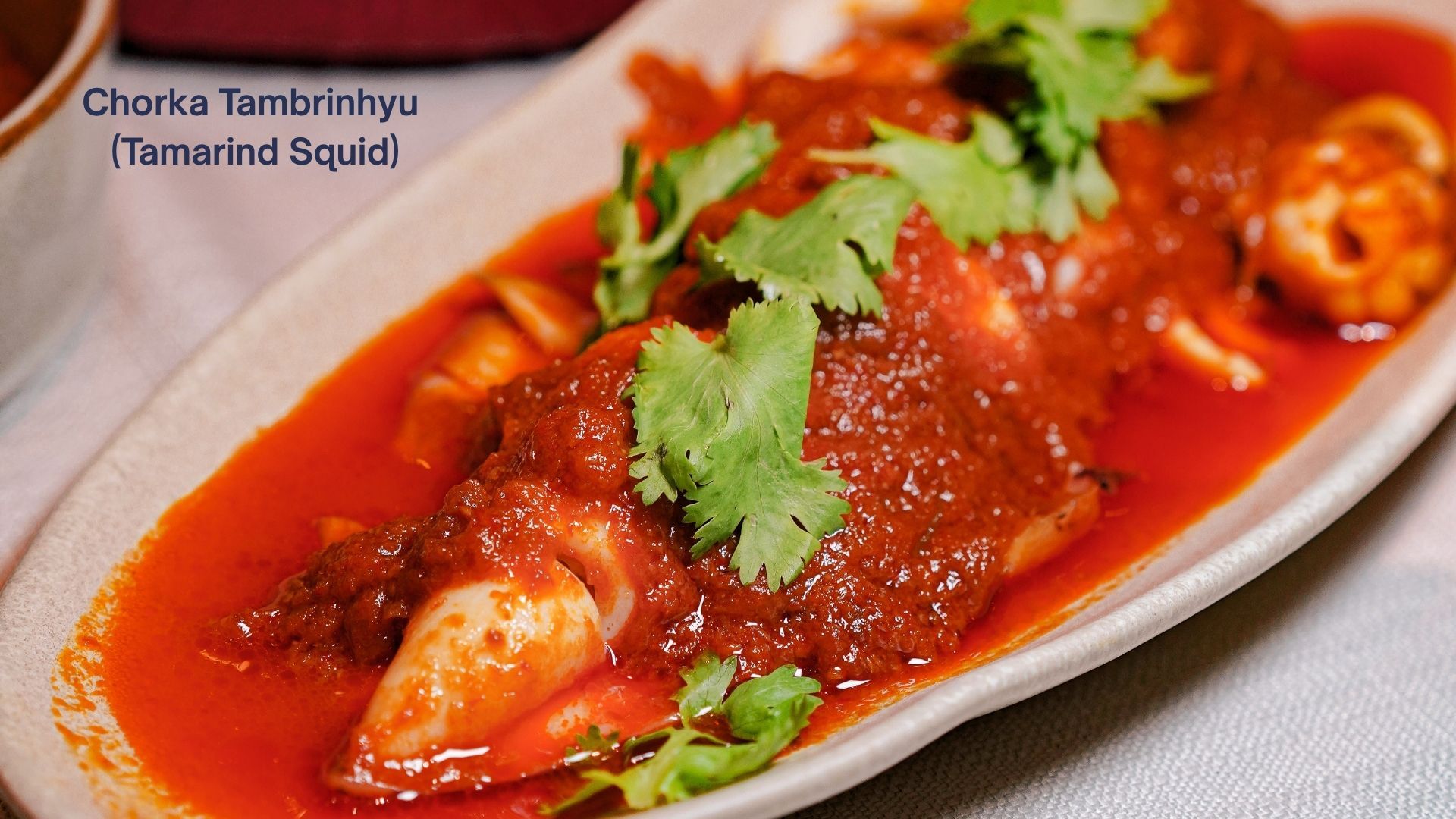
2. Chorka Tambrinhyu (Tamarind Squid)
The name is Kristang in origin, and the dish is a fine example of the community’s characteristic spice logic. Squid is cooked in a sauce built from chilli, garlic paste and tomato, then sharpened with English mustard, an ingredient that appears with enough regularity in the cuisine to be seen as a defining player. The mustard does not dominate. Instead, it adds a background heat and a slight bitterness that keeps the dish from reading as purely Southeast Asian—an interesting inflection. This is a preparation that would not exist without the particular cultural history that produced it.
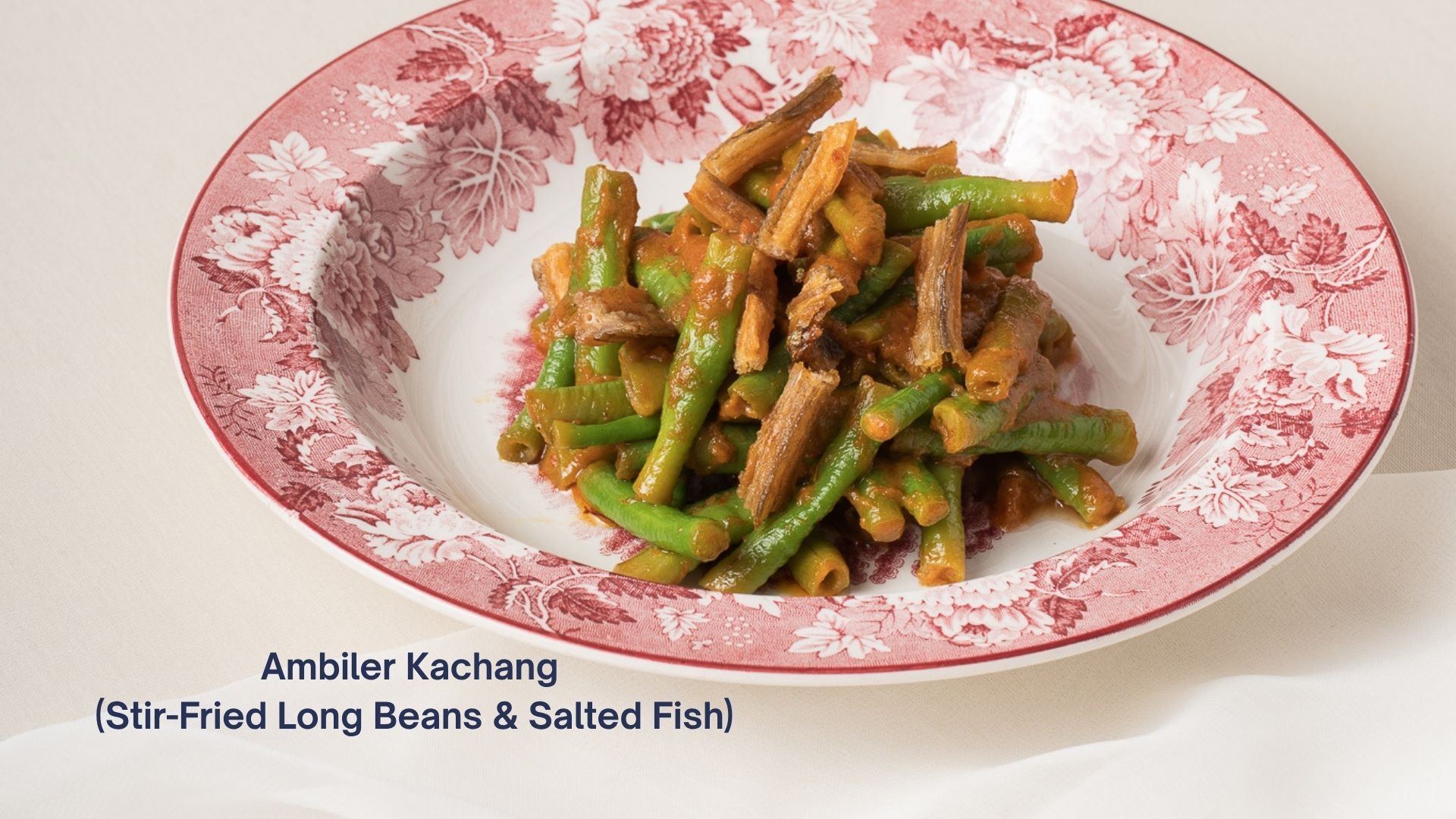
3. Ambiler Kachang (Stir-Fried Long Beans & Salted Fish)
This dish appears on the menu with a quiet confidence that belies how much history it carries. The recipe comes directly from Gilmore D’Silva, Chef Damian’s grandfather, and it is one of the clearest examples on the menu of a dish that has survived intact across generations. Long beans are stir-fried with salted fish using Gilmore’s original rempah, a spice paste built on aromatics, and finished with tamarind for a sourness that cuts cleanly through the salt. It is fundamentally a vegetable dish, but one with a depth of flavour that most meat preparations would struggle to match.
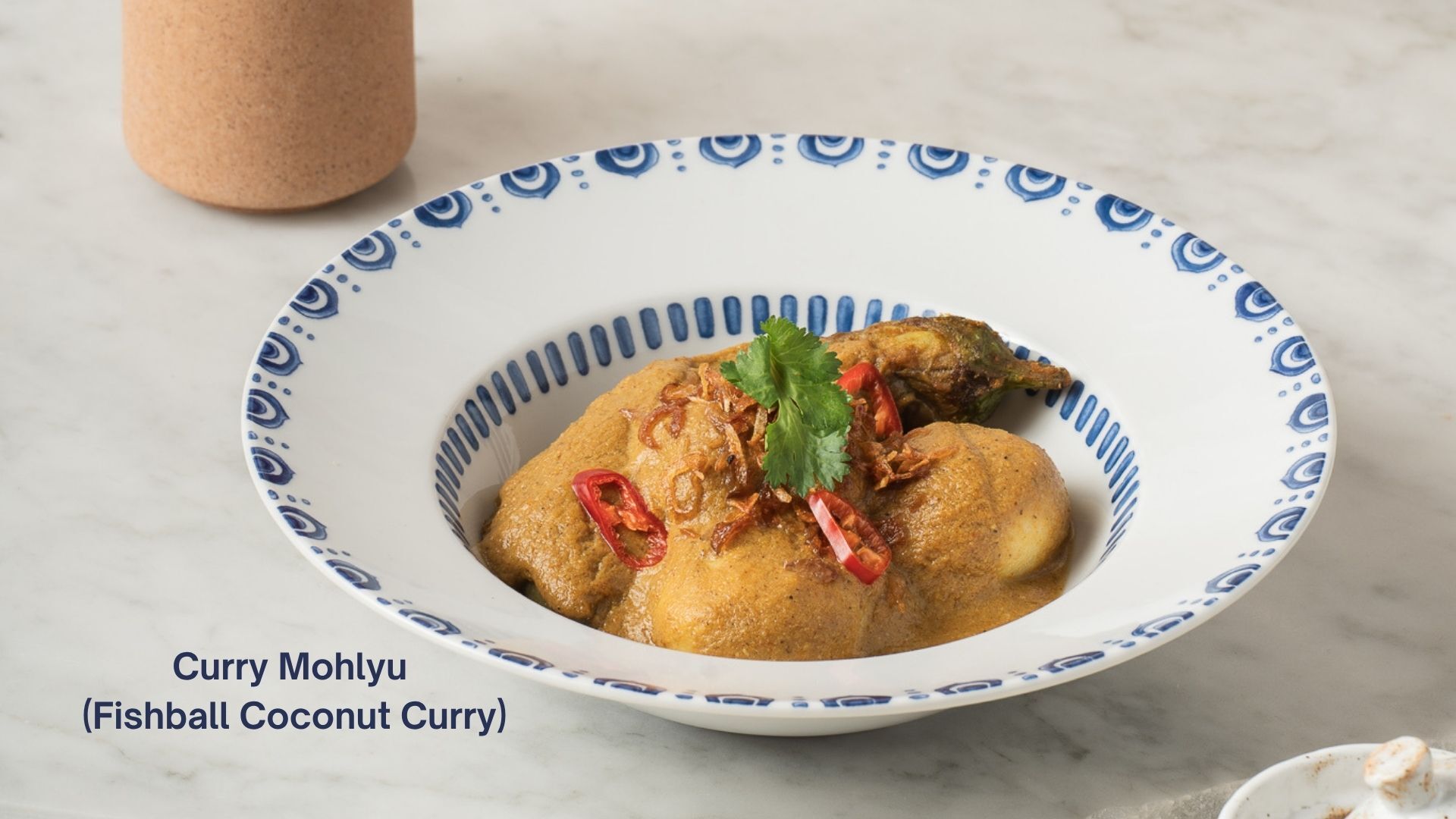
4. Curry Mohlyu (Fishball Coconut Curry)
Mohlyu is a Kristang term, and the dish it names is an old one. A spice paste of galangal, lemongrass, belachan and coriander is cooked down before toasted coconut and coconut milk are added to build the sauce, a method that gives the curry a rounded, slightly smoky depth that thinner coconut curries do not achieve. Fishballs are the traditional centrepiece, and their inclusion here is historically faithful rather than merely nostalgic. This is a dish that reflects the Kristang community’s coastal origins with both honesty and clarity.
5. Babi Chin (Fragrant Braised Pork Belly)
Babi is Malay for pork, but what follows is entirely Peranakan. Babi Chin is a dish that traces directly to the Chinese braised pork belly tradition, reinterpreted through the Peranakan kitchen’s affinity for layering Chinese ingredients with the aromatics available in Southeast Asia. Pork belly is slow-braised with soya bean paste, coriander seeds and chillies until the paste loses its raw salinity and becomes a dark, savoury sauce. While the coriander seeds and chillies lend fragrance and heat, the fermented bean paste leads. It is one of the older preparations in the Peranakan canon, and one of the clearest examples of what that cuisine stands for—not fusion, but a complete and deliberate tradition of its own.
The Reward of Ordering Something You Struggle to Pronounce
We relish in the satisfaction of ordering something we know nothing about and finding that it rewards the trust entirely. Several of the dishes above will be new to most diners, even those who consider themselves well-acquainted with Singapore’s culinary range. That unfamiliarity is not a barrier. At Gilmore & Damian D’Silva, it is something closer to an invitation. We hope you leave room for surprise.
These dishes are available at Gilmore & Damian D’Silva, located within National Gallery Singapore. The restaurant is open for lunch and dinner, and reservations are recommended. Reserve your table at gilmore.sg, or plan your visit here.

Next News & Events
Eurasian Cuisine in Singapore Has Always Been Hard to Categorise
Hard to define but deeply specific, Eurasian food tells Singapore’s most layered culinary story. Experience it at Gilmore & Damian D’Silva, National Gallery Singapore.