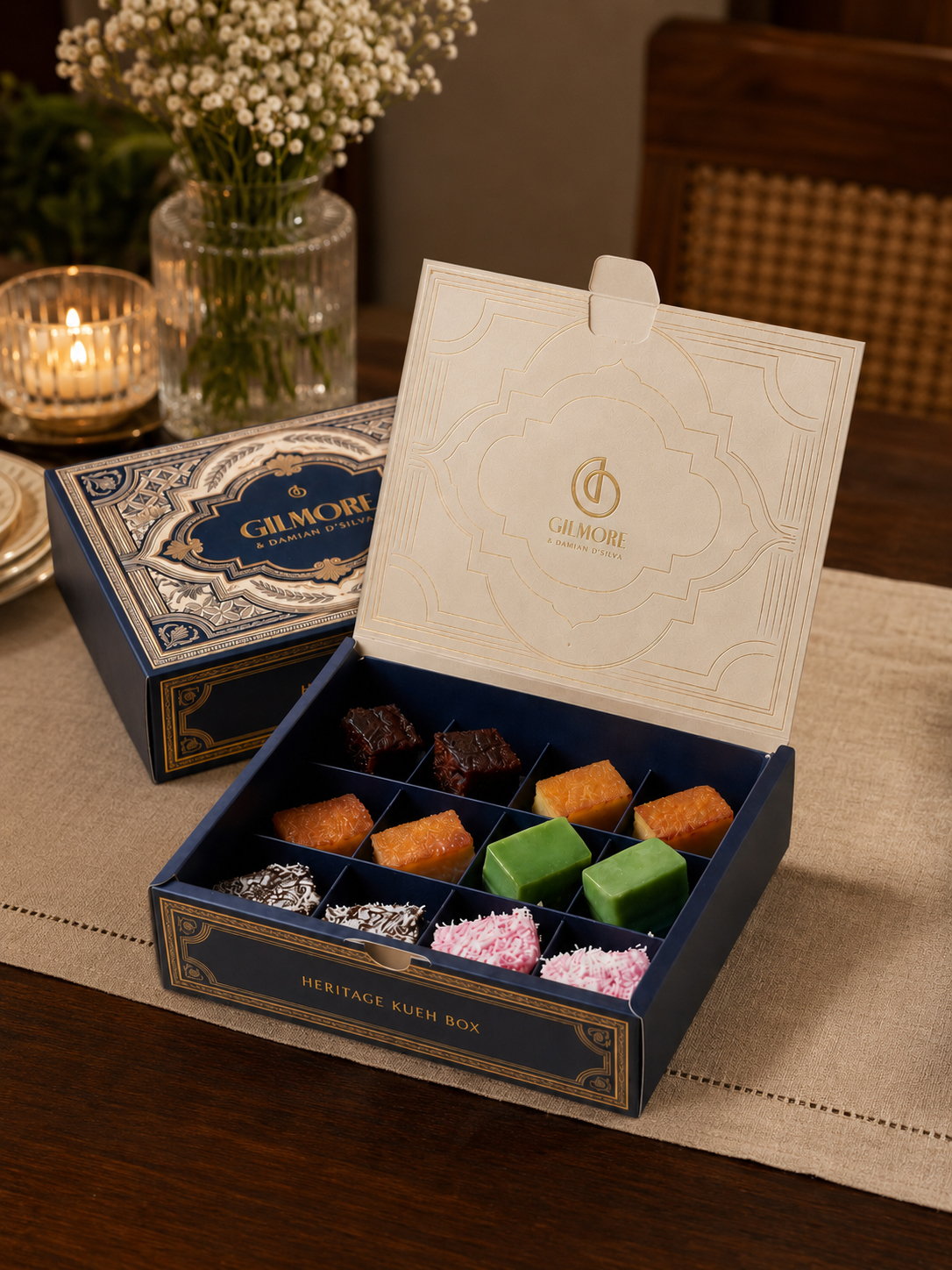

A Bite-Sized History of Some of Singapore’s Local Desserts
Singapore’s culinary heritage is often discussed through its hawker staples, but its sweets tell an equally compelling story. Passed between communities, adapted across generations, and shaped by migration and trade, local desserts carry a historical weight that a plate of char kway teow rarely gets credit for. A few of them, still made by hand in kitchens that take the craft seriously, have survived long enough to deserve closer attention.
Kueh: Small Cakes, Long Memory
The word “kueh” describes a broad family of bite-sized confections with roots across the Malay Archipelago and South China. Peranakan, Malay and Hokkien communities each contributed their own variations, united by a shared grammar of ingredients: glutinous rice, coconut milk, pandan and Gula Melaka. Colours were traditionally derived from natural sources such as pandan juice and butterfly pea flower; textures were achieved through steaming, pressing and layering rather than any mechanical shortcut. The knowledge required to produce them well was historically transmitted within families, which is unfortunately why so many varieties have disappeared as those family lines dispersed.
Kueh Bingka: The Baked One
Made from grated tapioca, coconut milk, eggs and sugar, Kueh Bingka is baked rather than steamed, giving it a golden crust and a soft, chewy interior that distinguishes it from its kueh cousins. A fixture of Peranakan and Malay festive spreads, it has been prepared in various forms across Singapore, Malaysia and Indonesia for well over a century. Tapioca itself arrived in Southeast Asia via Portuguese and Spanish trade routes in the 16th and 17th centuries, making Kueh Bingka a small, sweet record of the region’s longer commercial history.
Pulut Hitam: Porridge as Comfort
Black glutinous rice has been cultivated across mainland Southeast Asia and the Indonesian archipelago for centuries. In Singapore, it became a comfort food across communities, served warm with coconut milk poured generously over the top. Malay and Peranakan households prepared it as a dessert, but it also appeared at breakfast and on ceremonial occasions. The slow-cooking process, typically an hour or more over low heat, meant it was food that demanded patience, and its presence on a table implied that someone had made the time.
Sugee Cake: A Eurasian Table’s Crown
Sugee cake belongs unmistakably to Singapore’s Eurasian community. Specifically, it is rooted in the Kristang culture that emerged from Portuguese and local intermarriage in Malacca from the 16th century. Made with semolina toasted to a nutty depth, and enriched with butter, ground almonds and brandy, it was traditionally baked for Christmas and weddings. Recipes were closely guarded and passed from mother to daughter with slight variations in the semolina-to-almond ratio distinguishing one family’s version from another’s. Its standing as a heritage item endures through the simple fact that even today, no Eurasian Christmas table is considered complete without one.
Red Bean & Almond ’Pancake’: A Sweet Worth Knowing
The red bean pancake has well-established roots in Chinese culinary tradition, where red bean paste has been used as a sweet filling for centuries. Revered in Chinese culture for its perceived nourishing properties, the azuki bean was historically associated with celebration and good fortune, appearing at New Year and festive occasions in various forms across different dialect communities. The fried pastry preparation travelled to Singapore with Chinese migrants in the 19th and early 20th centuries, settling comfortably into a culinary culture that already understood the value of wrapping something meaningful in something delicious. Finished here with almond flakes and a clean, lightly sweetened paste, it is the kind of dessert that rewards those who do not overlook it in favour of something more conspicuous.
On What Survives
Not every dish from Singapore’s culinary past has found kitchens still willing to make it properly. The ones that have persisted did so because someone, in each generation, decided they were worth the effort. That silent determination is the least celebrated ingredient in heritage cooking—and perhaps the most essential one.
Several of these desserts are made from scratch at Gilmore & Damian D’Silva, including handcrafted Heritage Kuehs on rotation, Kueh Bingka with Gula Melaka reduction and vanilla ice cream, Pulut Hitam with homemade coconut ice cream, Sugee Cake with toasted almonds, brandy and Chantilly cream, and the Red Bean & Almond ‘Pancake’. The restaurant sits within National Gallery Singapore, one of the city’s most significant civic landmarks and, as it happens, a rather fitting place to sit with something sweet and consider the centuries it carries.
Reserve at gilmore.sg, or plan your visit directly here.
