
A Guide to Eating Eurasian Food the Way It Was Meant to Be Shared
Most cuisines have a natural grammar, an order of dishes, a pace, a way of combining flavours across a table, that makes the meal cohere. For Eurasian food, that grammar developed over several centuries within the domestic kitchens of Singapore’s Kristang and broader Eurasian communities, where meals were shaped by Portuguese culinary tradition, Southeast Asian ingredients and the specific social rhythms of large, close-knit households.
Sunday meals were events. Festive occasions produced dishes that cooked overnight. The table was always the centre of the gathering, and the food was organised around it accordingly, shared freely, replenished generously, consumed while dictated by conversation rather than by kitchen timing. Well, that grammar was never written down for outsiders. It was absorbed at family tables, across generations. So this is an attempt to explain it clearly enough to be useful.
Come With More People Than You Think You Need
The first and most consequential decision happens before you sit down. Eurasian cooking is built around variety at the table, which means the more people you bring, the more of the menu becomes accessible to you. A table of two can eat well, but a table of four or more can eat the way the cuisine was intended, with a spread of dishes that allows the kitchen’s range to reveal itself properly.
This matters more for Eurasian food than for many other cuisines because the flavour relationships between dishes are part of the experience. A tamarind-based preparation tastes different alongside a coconut milk dish than it does in isolation. A sambal gains context when eaten next to something mild. The meal builds, and that building requires breadth.
Order Across the Menu, Not Down It
The instinct for many diners is to move vertically through a menu, a starter each, a main each, perhaps a shared dessert. For Eurasian food, the more rewarding approach is horizontal. Order several dishes from different sections and bring them to the table together, or in loose waves, rather than in rigid courses.
Traditionally, an Eurasian family meal would place rice at the centre and surround it with a rotating cast of meat, seafood and vegetable preparations, all eaten simultaneously. Each spoonful was assembled by the diner rather than plated by the kitchen. That improvisational quality, the freedom to combine a piece of braised meat with a vegetable preparation and a spoonful of rice in whatever proportion felt right, is part of what makes the cuisine so satisfying when eaten correctly. At Gilmore & Damian D’Silva, the Nasi Minyak, a fragrant ghee rice, serves precisely this anchoring function.
Pace the Meal Around the Heavier Dishes
Eurasian cooking can be rich. Slow-braised meats, coconut milk curries and dishes built on fermented pastes each carry considerable depth, and eating several of them in quick succession without pause can flatten the experience. The better, more strategic approach is to treat lighter preparations, like a vegetable dish, a kerabu or a broth-based item as breathing room between the heavier ones.
This is how the food was eaten at home. A Sunday meal in a Kristang household might include a slow-braised dish that had been cooking since morning alongside a simply prepared green vegetable and a fresh sambal. The contrast was not accidental. It was what allowed the table to keep eating, and kept the meal feeling generous without coming across as exhausting.
Let the Table Finish Together
In Eurasian households, the meal did not end when individual plates were cleared. It ended when the table was ready, when the last of the shared dishes had been finished, the rice bowl emptied and the conversation had run its natural course. Dessert, when it came, was unhurried.
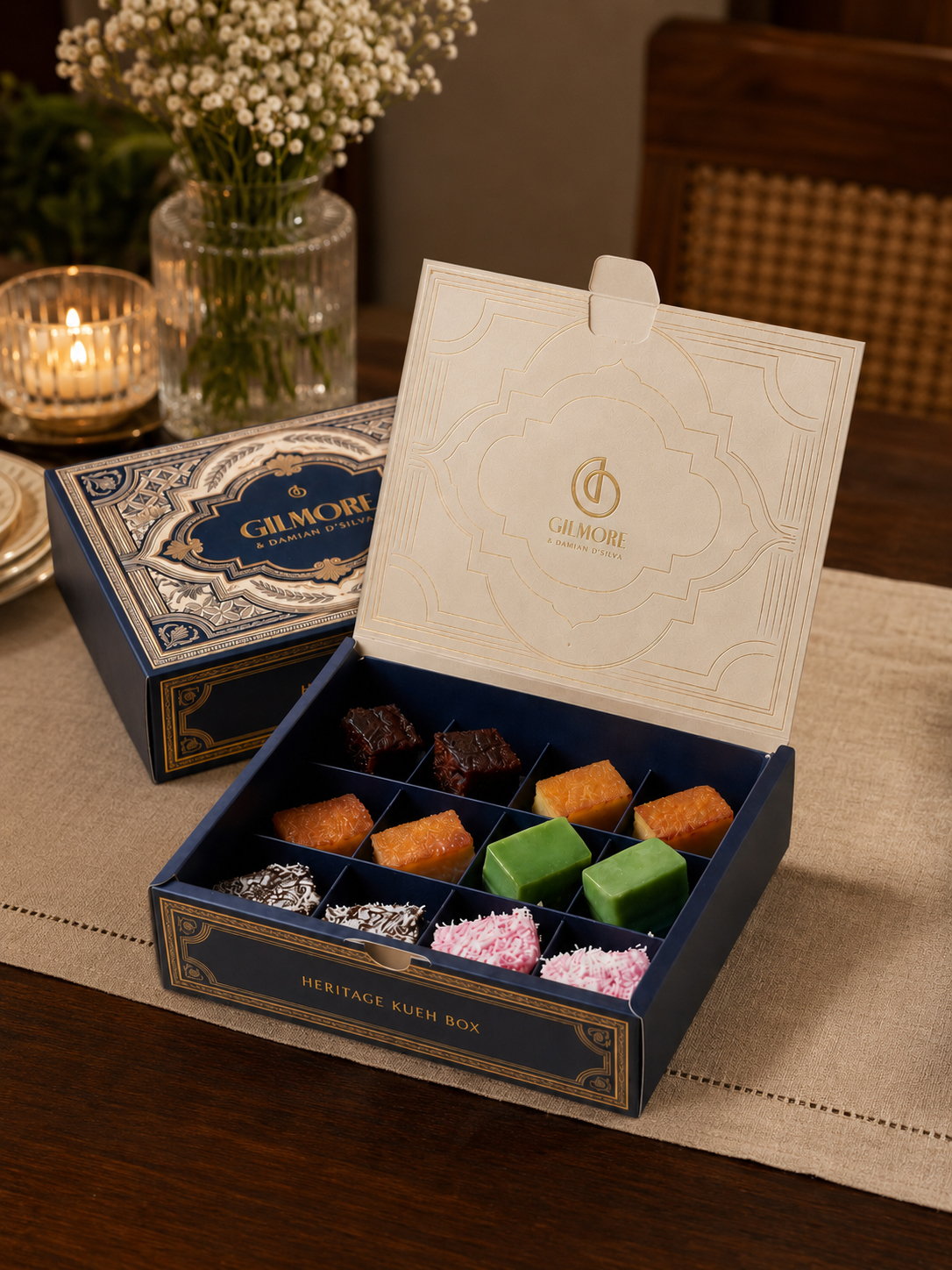
That rhythm is worth preserving. Ordering dessert as a table rather than individually, and treating it as a collective close to the meal rather than a personal afterthought, is consistent with how Eurasian food has always been enjoyed. The heritage kuehs, in particular, were made to be passed around and shared from a single plate. It would be almost sacrilegious to portion it out and eat it in silence.
On the Question of Ordering Too Much
Order too much. This is not recklessness. It is tradition. Eurasian hospitality has always expressed itself through abundance at the table, and the presence of more food than strictly necessary is a cultural signal that the guest is valued. Leftovers, in this tradition, are not a failure of planning. They are evidence that the table was properly set.
Generosity Was Always the Method
The habits described above are not rules but simply what happens when a cuisine developed for large families, festive tables and the specific pleasure of feeding people well is eaten the way its cooks intended. Eurasian food is patient with those who approach it cautiously, but it saves its best for the tables that arrive ready to share.
Gilmore & Damian D’Silva offers the full breadth of Eurasian and heritage Singaporean cooking across lunch and dinner, with a menu that rewards exactly the kind of shared, unhurried eating described above. The restaurant is located within National Gallery Singapore. Reserve your table at gilmore.sg, or plan your visit here. Needless to say, do come with company.
Next News & Events
A Bite-Sized History of Some of Singapore’s Local Desserts
Singapore’s culinary heritage is often discussed through its hawker staples, but its sweets tell an equally compelling story.